
Searching Beauregard Parish Criminal Dockets
The clerk runs its online criminal index through a subscription eSearch portal. The public landing page offers only account controls and Certified Dates. There is no free name-search form. Before searching, figure out where the case was filed. Felonies and most state-law matters sit in the 36th JDC. A JP or municipal matter lives elsewhere. Keep any case number from a notice exactly as written. The court publishes no Beauregard case-number format, so do not guess at one.
When a result is missing, old, image-gated, or restricted, go straight to the Beauregard Parish Clerk of Court. The Criminal Department indexes filings, keeps criminal minutes, and provides copies, certifications, and searches. It is also the right route for the actual court document. An index line alone will not serve.
- Read the paperwork for the filing court, division if shown, and case number.
- Use Certified Dates, then sign in to eSearch with the applicable paid subscription.
- Search the criminal index using the information available through the authenticated service.
- Read the entries in sequence and separate a charge or motion from a plea, ruling, setting, or disposition.
- Call the clerk or request a copy when the image is not present or a certified court record is needed.
Beauregard Criminal Index Since 2009
The clerk states that its online service holds Beauregard criminal indexes and images beginning January 1, 2009. Even a case from that window may sit behind a subscription. Some record images stay closed. That date marks online coverage only. Older criminal records may still exist at the courthouse. If eSearch comes up empty, try a counter visit or a department call. Fax, mail, or a written public-records request also work.
Access tiers run $20 for 24 hours, $100 for 30 days, and $1,200 for 365 days. Those fees buy online entry and nothing more. They do not cover the clerk's published criminal-search fee. No tier promises that a sealed, juvenile, or expunged item will appear.
The Criminal Department explains its copy services. The clerk homepage carries the index and image date range.
Inside a Beauregard Parish Criminal Docket
A Beauregard Parish criminal docket names the court, the division (A or B), the filing date, the case type, the parties, the charge, and the recorded status. Dated entries then carry the case forward. A bill of information or indictment opens the charging stage. At arraignment, the charge is addressed and a plea is entered. Remember that a filed motion line is a request. The court has not ruled until an order says so.
| Case number | The local public sources do not publish a standard pattern; preserve the case number as printed on the notice or court paper. |
|---|---|
| Charge | Offense description, cited law or ordinance, count, classification, and an amended charge where the record presents one. |
| Process | Complaint, bill of information, indictment, arraignment, plea, bond, forfeiture, capias-related entry, motion, or order. |
| Setting | Date, time, division or judge, hearing type, reset or continuance, and virtual instruction when the record contains it. |
| Disposition | Dismissal, acquittal, conviction, plea, sentence, probation-related event, Article 893 or 894 entry, or appeal. |
| Access | Possible juvenile, sealed, expunged, redacted, or restricted indication and any available image or copy route. |
Bond forfeiture counts as a docket event. By itself it proves no conviction. A case marked "set" simply has a court date coming, and that is not a final result.
Beauregard Criminal Division Allotment
An indictment or bill of information gets filed in the 36th JDC. Felony cases are then randomly allotted to Division A or Division B. So a Beauregard criminal docket can carry either label. The local rule gives parties no say in the division. Related bills may even land in different divisions. A transfer must follow the required adversarial hearing.
Both divisions share one records office: the Beauregard Parish Clerk of Court. The division label matters most when you call the right chambers to confirm a setting. It does not create a separate criminal clerk or a second online portal.
The official 36th JDC felony-allotment rule and the district-rules page spell out the division structure.
How a Criminal Case Moves
A criminal docket records procedure in time order. Early entries often include a complaint, bill of information, or indictment. Later lines may show arraignment, bond, or motion practice. A pretrial date, a plea, a trial setting, or a signed order may appear too. The closing stretch can hold a dismissal, acquittal, conviction, or sentence. An appeal, writ, or expungement-related event can also appear. Read the whole sequence before judging any single entry.
Docket flow: Filing → Arraignment → Pretrial → Plea or Trial → Disposition → Sentencing
A reset just moves a setting. If you need a current appearance date, confirm the division, time, location, and hearing type with 36th JDC chambers rather than trusting an older docket line.
Beauregard Criminal Minute Copies
The Criminal Department opens and indexes criminal cases. It processes pleadings and maintains the minutes. It holds trial exhibits and evidence. It also issues copies, certified copies, extracts, and searches. A minute entry is the clerk's own record of what happened in court. An extract is a short excerpt the clerk supplies. Both differ from a docket index row. One of them may be the paper you actually need.
| Criminal record service | Published amount | What it is |
|---|---|---|
| Plain copy | $1 per page | Copy of the requested criminal record page. |
| Conformed copy | $3 | Date-filed stamped copy, separate from certification. |
| Certification | $5 | Clerk certification for the copy. |
| Criminal search | $20 per ten years | Department search service, distinct from an online subscription. |
| Extract of minutes | $10 | Clerk-provided minute extract. |
The criminal fee schedule also lists Article 893/894, DWI, and non-moving-violation payment lines. Treat those as local fee items, not flat charges for a criminal docket search.
Courts That Hold Criminal Dockets
Which court holds the file? That depends on the charge. Felonies in Beauregard Parish belong to the 36th JDC. The unified Beauregard Parish Clerk of Court keeps those district clerk records. Misdemeanors, probation, traffic matters, and ordinance cases can sit elsewhere. That could be the district court, a justice-of-the-peace court, or a city channel. Read the citation or charging paperwork. It names the venue, and guessing leads to the wrong criminal docket every time.
Not every criminal-looking event is a 36th JDC docket. DeRidder's administrative adjudication schedule covers city code enforcement, not parish criminal trials. For a JP matter, call the district named on the paperwork. A 36th JDC criminal file goes through eSearch or the clerk's Criminal Department. Appeals from district court head to the Court of Appeal, Third Circuit.
Beauregard Virtual Criminal Appearances
The 36th JDC permits some virtual criminal appearances, but only with approval. Defendants must check in through Louisiana Wallet first. Sign in on time, then stay connected until the case is called. Recording and screenshots are prohibited. This process is for appearing, not for browsing a criminal docket or pulling a video archive, and it never replaces confirming the setting with the right division.
Judge-specific virtual waiting rooms require court approval. If a notice or an online docket entry points to a virtual event, confirm the date, time, and division with chambers. The clerk still holds the record. The 36th JDC criminal-defendant page sets out the check-in rules and the no-recording policy.
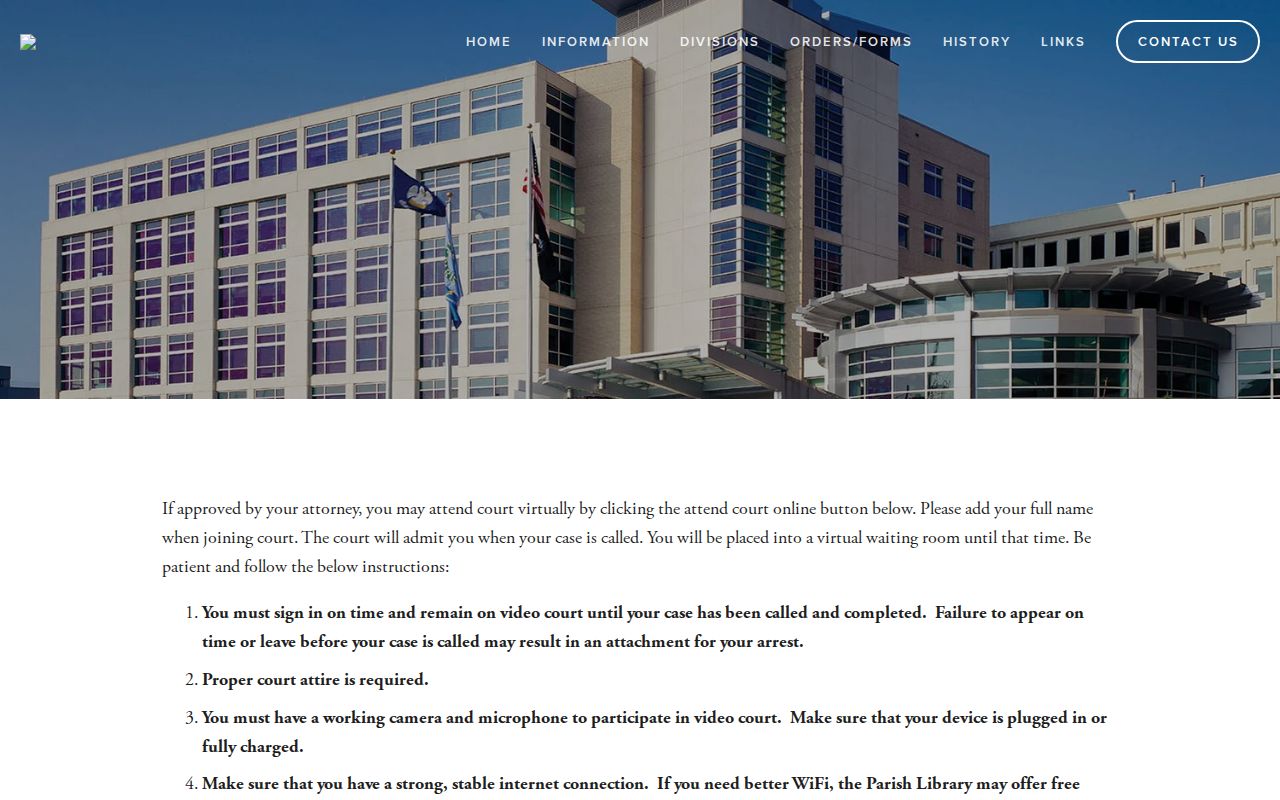
Virtual tools serve one purpose here: an approved court appearance. A Beauregard criminal docket record still comes through eSearch or the clerk. Miss the sign-in deadline or drop off before your case is called. The consequences can be serious. If the instructions are unclear, contact the court promptly.
Sealed Dockets and Public Access
Legal limits shape what any Beauregard criminal docket search can return. Juvenile matters are the clearest local example. The 36th JDC does keep a juvenile docket, yet Louisiana Children's Code Art. 412 keeps those proceedings confidential except as the law allows. Treat expunged or sealed records the same way. They are not ordinary search results. The eSearch landing page says nothing about how a restricted record will display, if it appears at all.
Key Rules:
Louisiana CCP Art. 251 places the court record with the clerk and authorizes inspection, copying, and certification as law permits.
Children’s Code Art. 412 limits public access to juvenile proceedings and records.
Children’s Code Art. 919 governs juvenile expungement or sealing motions filed in the court holding the records.
The clerk's expungement materials describe a separate local process. They also note that some legally authorized agencies may still retain access. Ask the clerk about the lawful route for a specific court file instead of treating a missing result as an answer.
Beauregard Criminal Docket Fallbacks
No online image? Build the request around the essentials. Name the court and the case number if known. Add the defendant or party, an approximate date range, and the record you want. Say whether you need a plain copy, a conformed copy, a certified copy, or minutes. The Criminal Department takes calls at (337) 463-8595 and criminal faxes at (337) 202-7834. You can appear in person at 200 West Second Street in DeRidder or mail the request to P.O. Box 100, DeRidder, LA 70634.
Older files may allow counter inspection or retrieval, so ask. A pending setting belongs with chambers as well as the clerk. JP and city cases go straight to the issuing court. Those distinctions keep a Beauregard criminal docket request with the office that actually maintains the file.