
Searching the Beauregard Parish Court Docket
The clerk's eSearch gateway is the main online route into a Beauregard Parish court docket. You will need an account and a subscription. There is no free, anonymous search box. Before you begin, sort out whether the case is civil or criminal. Copy the case number from any notice you received. No number handy? Search by the full party or entity name plus an approximate filing year. The clerk publishes no local case-number pattern. So copy numbers straight from court paperwork rather than guessing at a format.
Keep the issuing court in mind, though. A matter from a justice-of-the-peace district, a DeRidder administrative hearing, or another local venue may never show up in the 36th JDC record. For an old, restricted, or unavailable record, fall back on the Beauregard Parish Clerk of Court. Staff can help by counter visit, phone, mail, fax, or a written request.
- Identify the court named on the notice, citation, petition, or prior order.
- Collect the case number if available, plus the full party name and approximate filing year.
- Check eSearch's Certified Dates utility, then sign in with the subscription that fits the needed search period.
- Read entries in date order, separating a filed document from a signed order, setting, minute entry, or final disposition.
- Confirm a pending setting with chambers and request a plain or certified copy from the clerk when the record itself is needed.
A docket result can help you locate a case. When details conflict, a court notice or a clerk-issued copy controls.
Beauregard Court Docket Divisions
The Thirty-Sixth Judicial District Court is a one-parish district court. It runs Division A and Division B. Chief Judge Martha Ann O'Neal leads Division A. Judge C. Kerry Anderson leads Division B. Both divisions share one Beauregard Parish Clerk of Court for district-level civil and criminal records. That local structure matters. It explains what a division label on a Beauregard court docket really means.
It marks the court channel handling the matter. It does not point to a separate parish clerk office. Local rules add detail on how cases get assigned. The clerk works with the chief judge to balance civil and criminal loads. That balance prevents forum selection. Felony cases are randomly allotted between the two divisions when an indictment or information is filed. A listed division is handy for sending a setting question to the right chambers. It is not a public choice of judge.
The court's own overview of divisions and contacts sits in its district-rules page, which collects the local-rule materials used alongside the statewide rules.
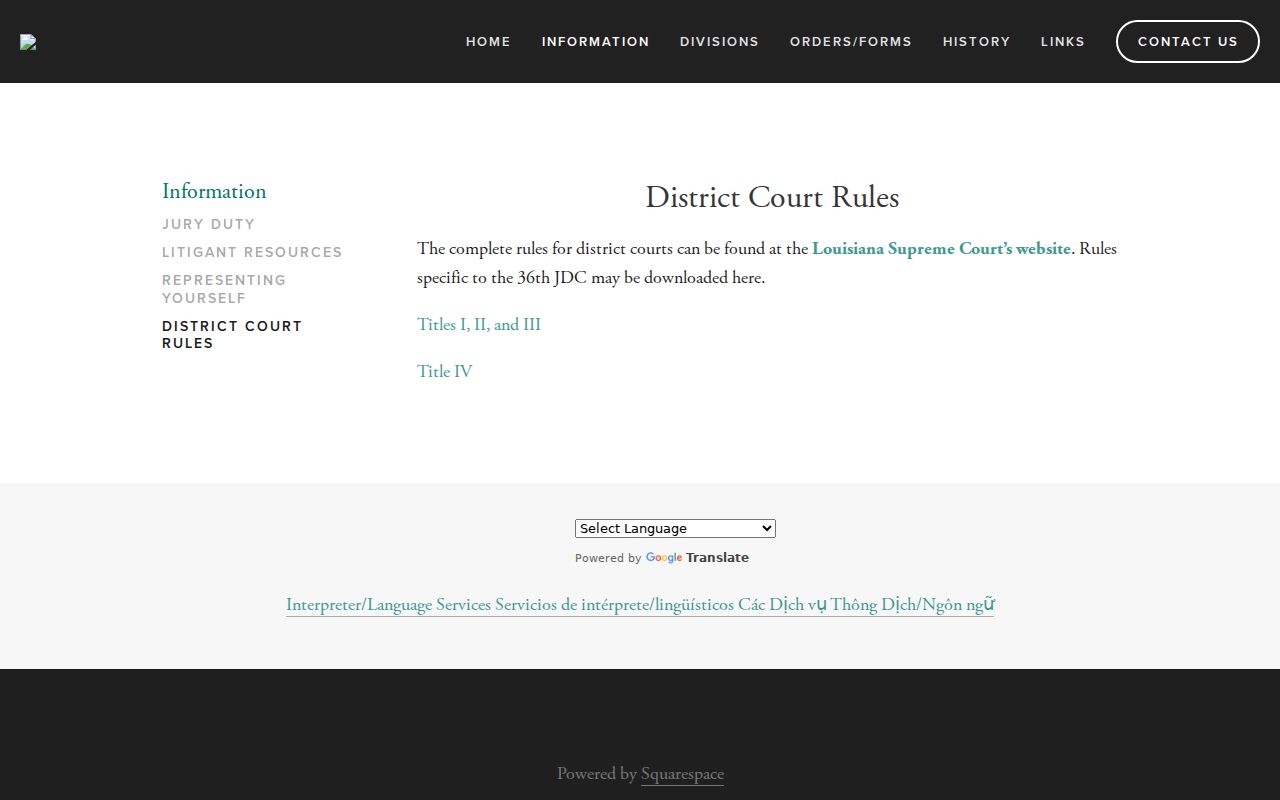
That shared-clerk setup is why a Beauregard court docket can carry Division A or Division B. The local rules explain the split.
Inside a Beauregard Parish Court Docket
A Beauregard Parish court docket is a chronological record. It logs what has been filed and what has happened in a case. Fields vary by case type. At its core, the record ties a case number and caption to dates, division, events, settings, and a recorded result. One caution matters here. Entries have limits. An entry may point to a filing or a minute entry without placing the full document image in the online result. The clerk can explain how to request the underlying record, but staff cannot give legal advice on what it means.
| Header | Case number, court, Division A or B, filing date, case type, caption, and recorded status. |
|---|---|
| Parties | Civil parties such as plaintiff and defendant, or the State and defendant in a criminal matter, plus counsel where indexed. |
| Events and filings | Pleadings, motions, orders, minute entries, service activity, hearings, continuances, and trial events. |
| Setting | Date, time, division or judge, courtroom or approved virtual instruction, and the type of court event. |
| Outcome | Judgment, dismissal, plea, sentence, appeal, writ, garnishment, or other disposition when recorded. |
| Access flag | Possible restricted, sealed, juvenile, expunged, image, or certified-copy information. |
A minute entry records what happened in open court. An extract of minutes is a clerk-supplied excerpt. A signed judgment or order is a separate document, even when the docket says it was filed.
Beauregard eSearch Subscription Access
Before you sign in, Beauregard eSearch shows only a handful of options: User ID, Password, Sign In, Create an Account, Password Reminder, and Certified Dates. Nothing else is visible. The public landing page does not reveal the post-login name, case-type, or date fields. That boundary matters. It means nobody can promise that a given filter, result limit, or export option awaits every subscriber.
Paid access is tiered. The portal lists $20 for 24 hours, $100 for 30 days, or $1,200 for 365 days. Subscribers are told to review Certified Dates before searching. Civil coverage starts earlier. Civil indexes begin January 1, 1983, with images from January 1, 2000, and criminal indexes and images both begin January 1, 2009. Those dates describe the published online coverage, not the limits of the clerk's underlying records.
| Visible control | Role | Practical use |
|---|---|---|
| User ID and Password | Subscriber sign-in | Required to reach the authenticated eSearch tools. |
| Create an Account | Registration route | Starts the account path before a paid search session. |
| Certified Dates | Indexing-date utility | Check it before assuming a recent filing is absent. |
| Search Management | Post-login utility | The public portal identifies saved and recent-search management, without publishing all field choices. |
The clerk's homepage is the better official source for the stated civil and criminal date ranges and department contacts.
The official login screen appears on the eSearch service page.
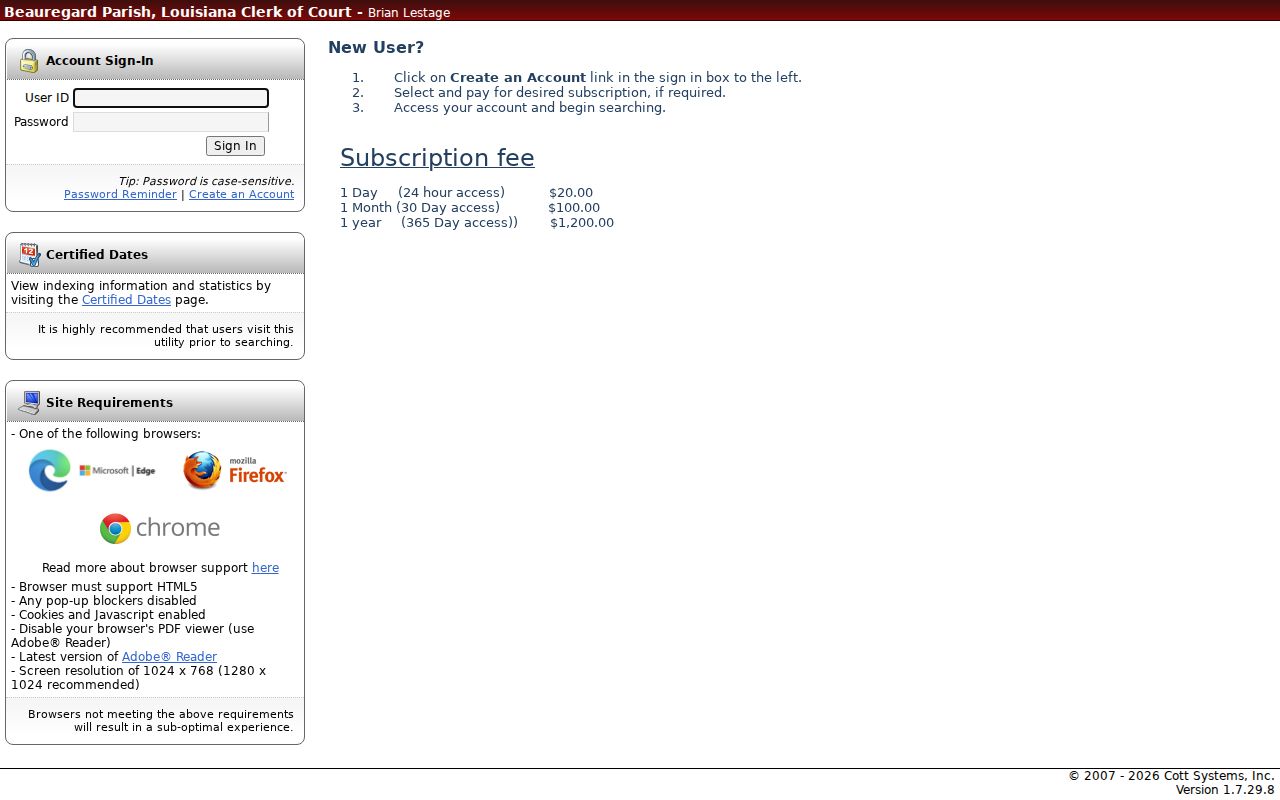
Sign-in-first design keeps the clerk request essential for Beauregard court docket access.
Courts That Keep Dockets in Beauregard Parish
Any Beauregard Parish court docket search starts with the right venue. The 36th JDC is the parish trial court. It holds the principal civil and criminal files. Justice-of-the-peace courts keep their own limited-jurisdiction records. DeRidder's published administrative adjudication calendar is a city code-enforcement channel, not a district court trial docket. That municipal line matters most with a citation or summons, because the issuing court tells you where the correct record lives.
| Court | Docket covers | Where to search |
|---|---|---|
| 36th JDC, Divisions A and B | Parish civil and criminal cases, with assigned juvenile matters subject to restrictions. | Beauregard Clerk eSearch, clerk counter, or civil and criminal departments. |
| Justice of the Peace | Limited civil, small-claim, eviction, and other matters assigned by law. | The issuing JP district, named on the paperwork. |
| DeRidder administrative adjudication | City code-enforcement hearings. | City Hall calendar and city clerk, not the district clerk index. |
| Third Circuit | Appeals from the 36th JDC. | Court of Appeal, Third Circuit docket and opinion resources. |
Juvenile cases are district-level matters. Louisiana's Children's Code still restricts their public availability. Finding a name in one channel never means every related court record is open.
Beauregard Docket Versus eClerks Index
eClerks LA runs through LCRAA. It serves as a statewide remote index for parishes that take part. It covers land, marriage, and civil information. The official guide walks through name matching, date ranges, and document-set choices. So it can help you find a civil index record across parishes. What it is not: a full statewide trial-docket viewer for Louisiana. It will not replace the Beauregard criminal index. It will not surface every image the parish clerk holds.
Louisiana has no single public trial-court search that spans every parish's civil and criminal dockets. A Beauregard court docket stays a parish task. Treat eClerks as an index layer. When its record families match your question, confirm images, availability, and certified copies with the Beauregard clerk. The official LCRAA overview explains the statewide remote-access authority behind the service.
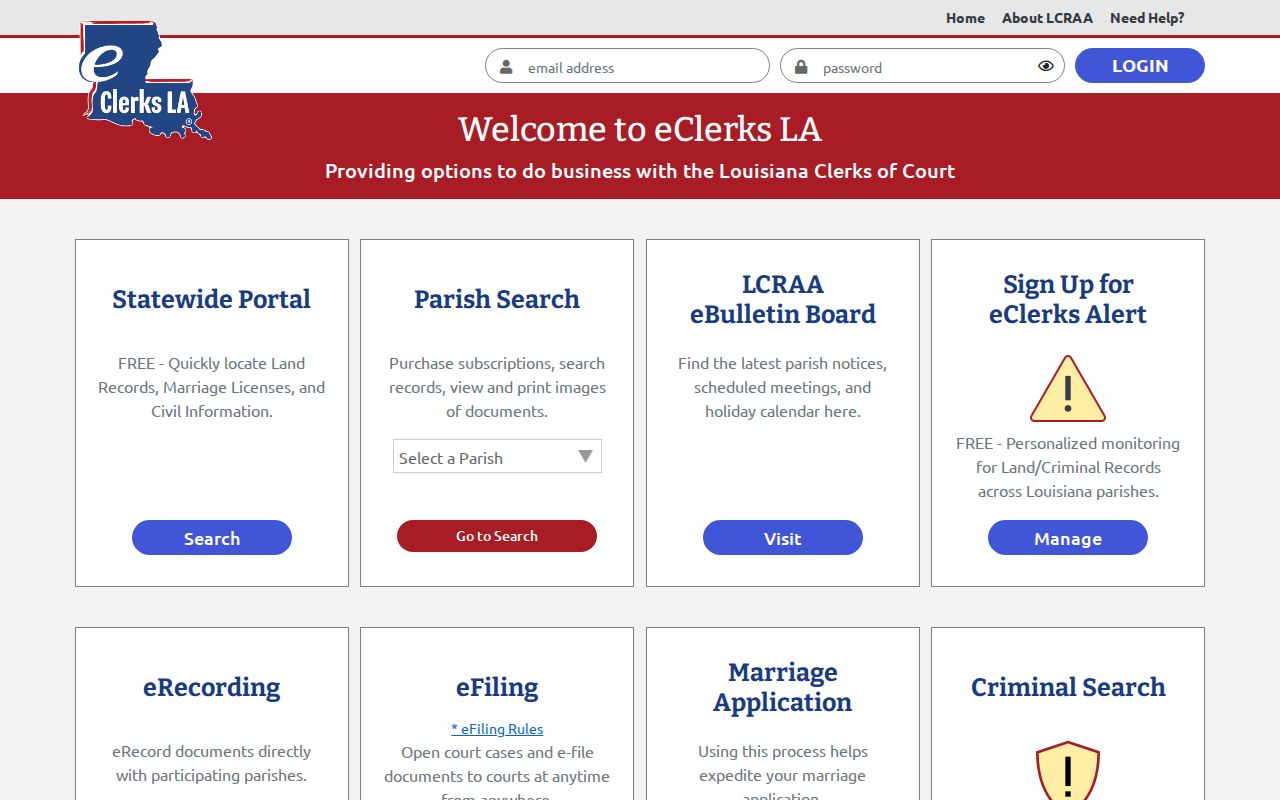
The statewide cards point you toward index services. For the details behind a Beauregard Parish civil or criminal court docket, though, the Beauregard clerk's office is still the place to go, since it holds the actual trial-court record for the parish.
Beauregard Docket Virtual Appearances
Approved virtual criminal appearances are a local court-access option. They are not a public docket viewer. They will not show you a Beauregard Parish court docket. The 36th JDC requires Louisiana Wallet check-in, timely sign-in, and staying available until your case is called. Recording and screenshots are prohibited. Judge-specific approval is required for the video-conference route as well. A virtual waiting-room link does not prove that a court setting is current, and no public recording of the proceeding comes from it.
When a Beauregard Parish court docket or notice points to a remote event, call chambers. Confirm the division, the time, and the instructions. The clerk keeps the docket and the court record. Chambers decides whether an appearance is approved and how it runs.
How to Find Court Dates and Settings
A Beauregard Parish setting can surface in several places: a docket entry, a filed notice, a minute entry, a judge-specific communication, or a court calendar. The parish offers no public daily-calendar search form. When a date matters, call 36th JDC chambers at (337) 463-7993 and ask for the division, date, time, courtroom or approved virtual instruction, and type of setting. The clerk record helps you locate the case. Chambers controls the current hearing procedure.
Settings come in many forms. Arraignments, civil rules, motions, trials, jury events, virtual appearances, and other court-specific events all appear on a Beauregard Parish court docket. A continuance or reset moves a date. Treat the old event as void until the new setting is confirmed. For approved virtual criminal appearances, the court requires Louisiana Wallet check-in, timely arrival, and no recording or screenshots.
The 36th JDC contact page lists the chambers and clerk lines used to make that confirmation.
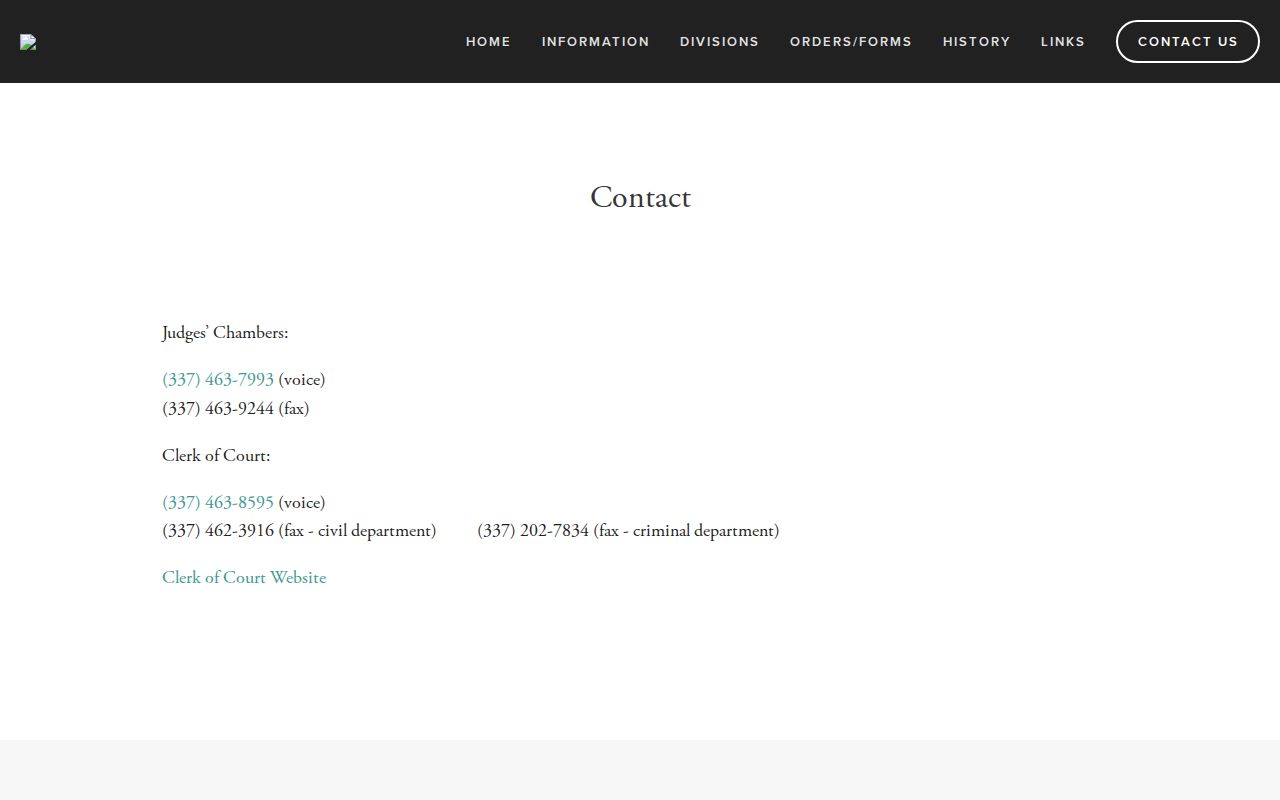
Direct court contact is the best way to check a current setting when a Beauregard Parish court docket and an older notice do not match. Note: A virtual waiting room is an appearance tool, not a public video archive or a stand-in for the docket record.
Public Access to Court Dockets
Louisiana law gives you the right to look at and copy public court records. Do so within lawful limits. For the 36th JDC, the clerk keeps the official record. Online access is a convenience only. It does not promise that every docket entry or image is public, complete, or certified. When eSearch does not return what you need, send a written request instead. A good one names the case, the record type, and the date range. Add your copy choice and delivery information.
Key Rules:
Louisiana Constitution Art. XII, §3 protects examination of public documents except where law establishes an exception.
Louisiana R.S. 44:1 defines public records to include retained documentary and electronic materials, subject to exceptions.
Louisiana CCP Art. 251 identifies the clerk as custodian and authorizes examination, copying, and certified copies as law permits.
Children’s Code Art. 412 makes juvenile proceeding records confidential except as statute allows.
When a record is unavailable, ask the clerk what restriction applies, what a copy will cost, and whether another court holds the file. One thing the clerk cannot do is give legal advice, either about access or about what a filing means.
Beauregard Docket Access Limits
Not every part of a Beauregard court docket is open the way ordinary civil and criminal files are. Juvenile, sealed, expunged, and other restricted portions follow separate rules. The 36th JDC keeps a juvenile docket. Louisiana law limits who may see juvenile records. The public eSearch landing page does not say whether a restricted row gets omitted, flagged, or shown without an image. On availability, the clerk is the authority. A search result is not.
Expungement is not a routine search filter either. The clerk's local materials describe a formal process with statutory limits. Some authorized agencies keep access even after an order. A docket entry can record a proceeding while the protected documents behind it stay closed. Family, adoption, protective-order, and other confidential portions may be restricted. It can come by law or by court order.
Ask for the precise court record you need, and question which lawful access route applies. That habit prevents a common mistake. The mistake is treating a missing online image as proof that no court file exists.
Docket Records at the Clerk's Office
The Beauregard Parish Clerk of Court maintains the 36th JDC civil and criminal docket record. That record runs from indexed suits and pleadings to minutes, copies, and certifications. Civil suits, divorce, custody, succession, and judgments go through the Civil Department. Criminal cases, minute entries, bills, sentences, certifications, and expungement materials go through the Criminal Department. Once you have located the case, take questions about a setting or a judge's procedure to chambers.
Requests reach the clerk in person, by phone, through department-specific fax, by mail, or by written public-records request. The schedules list copies at $1 per page. Conformed copies run $3 in both civil and criminal, and certification costs $5. A civil search on an individual name runs $15 per name for ten years. A criminal search costs $20 per ten years. Before mailing anything, confirm page counts, payment, and postage.
Beauregard Parish Clerk of Court
200 West Second Street
DeRidder, LA 70634
(337) 463-8595
Mail: P.O. Box 100, DeRidder, LA 70634
Civil fax: (337) 462-3916
Criminal fax: (337) 202-7834
Beauregard Docket Copy Choices
Beauregard docket copies come in several forms, and the differences matter. A plain copy is just paper. A conformed copy carries the date-filed stamp. The clerk issues a certified copy under seal as a correct copy, while a minute entry and an extract of minutes serve people who need the record of a specific act. Say which format you want when you contact the department, because a copy printed from the online index is not a certified record.
| Record service | Published amount | Use |
|---|---|---|
| Plain civil or criminal copy | $1 per page | Reference copy of a requested document. |
| Conformed copy | $3; civil schedule states per page | Date-filed stamped copy, distinct from certification. |
| Certification | $5 | Clerk certification for a copy when required. |
| Extract of minutes | $10 | Selected minute record through the criminal schedule. |
| Civil minute entry | $5 | Published civil fee-schedule line. |
Fees depend on what you order. The civil fee schedule and criminal fee schedule set out copy charges apart from filing deposits and other costs. Keep in mind that a deposit for a new civil filing is not a charge for looking up or copying a Beauregard court docket.
Beauregard Courthouse Docket History
Beauregard Parish keeps its district court and clerk at 200 West Second Street. The 36th JDC courthouse first rose in 1914. Renovation and annex work closed it for a time. It reopened in 2017 with modern space, elevator access, and restored historic touches like the main courtroom mural, the crest, and the stained-glass dome. One counter there still handles much of the record traffic for Beauregard Parish court dockets. Even now that eSearch offers remote index access, that counter matters.
The court history page traces the courthouse work. It also covers the creation of the Beauregard-only 36th JDC. It sets the two-division setup in context too. The district ran on one judge until a second judgeship came in 1997. That second seat split the docket load between two divisions.
For a look at the building itself, the 36th JDC home page publishes a courthouse image.

For any Beauregard court docket entry or document the online index cannot supply, the courthouse counter is still the place to go. The 36th JDC history page tells the story of the restored building.
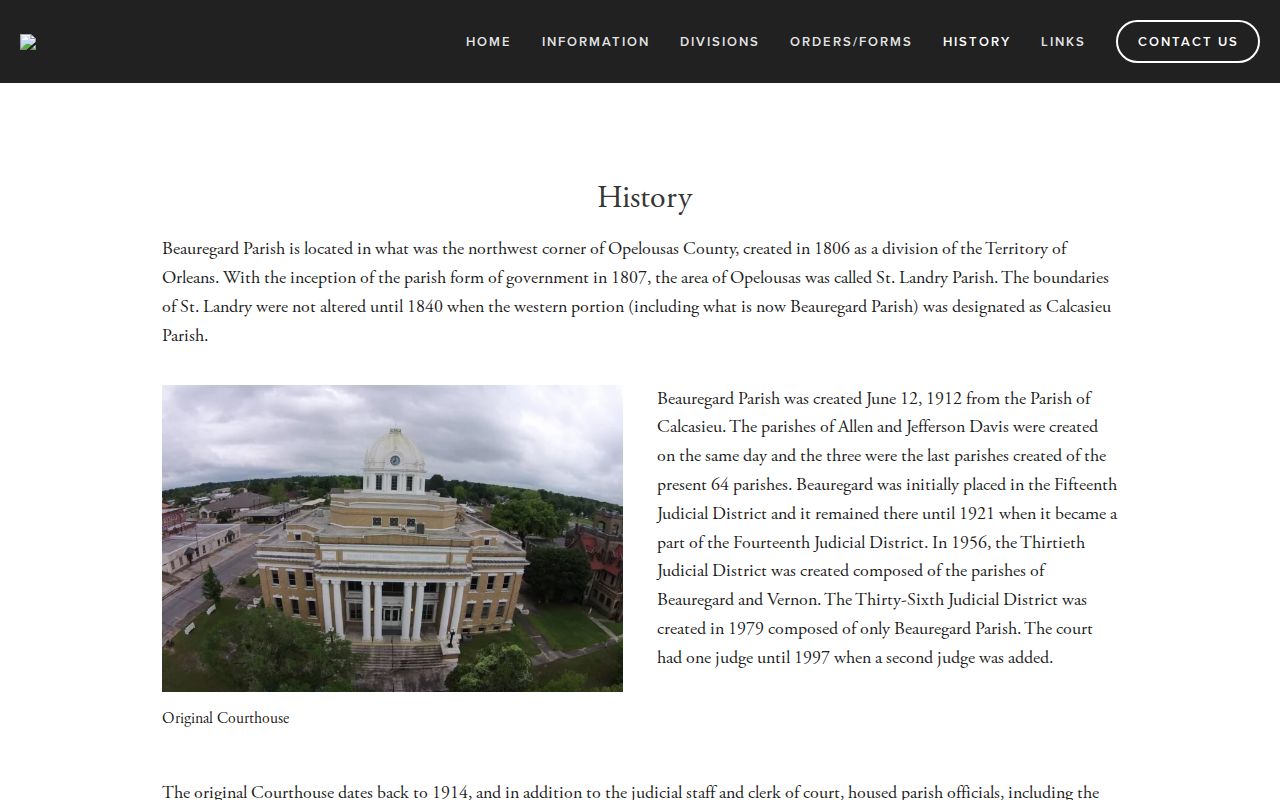
Local history draws a clear line between the public record route at the courthouse and the separate online subscription route. For Division A details, see what the 36th JDC posts.
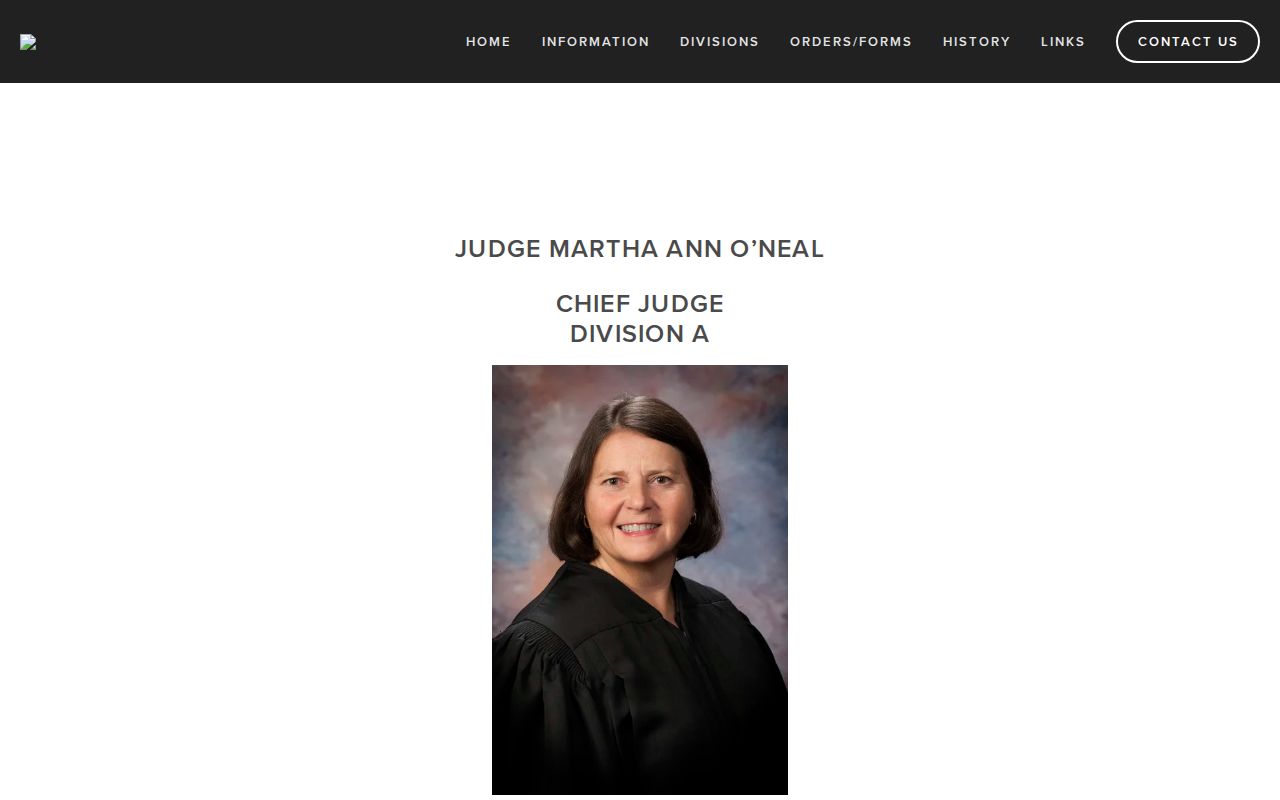
A Beauregard court docket heading or setting record may name Division A, one of the district's two divisions. Division B information appears on the 36th JDC site.
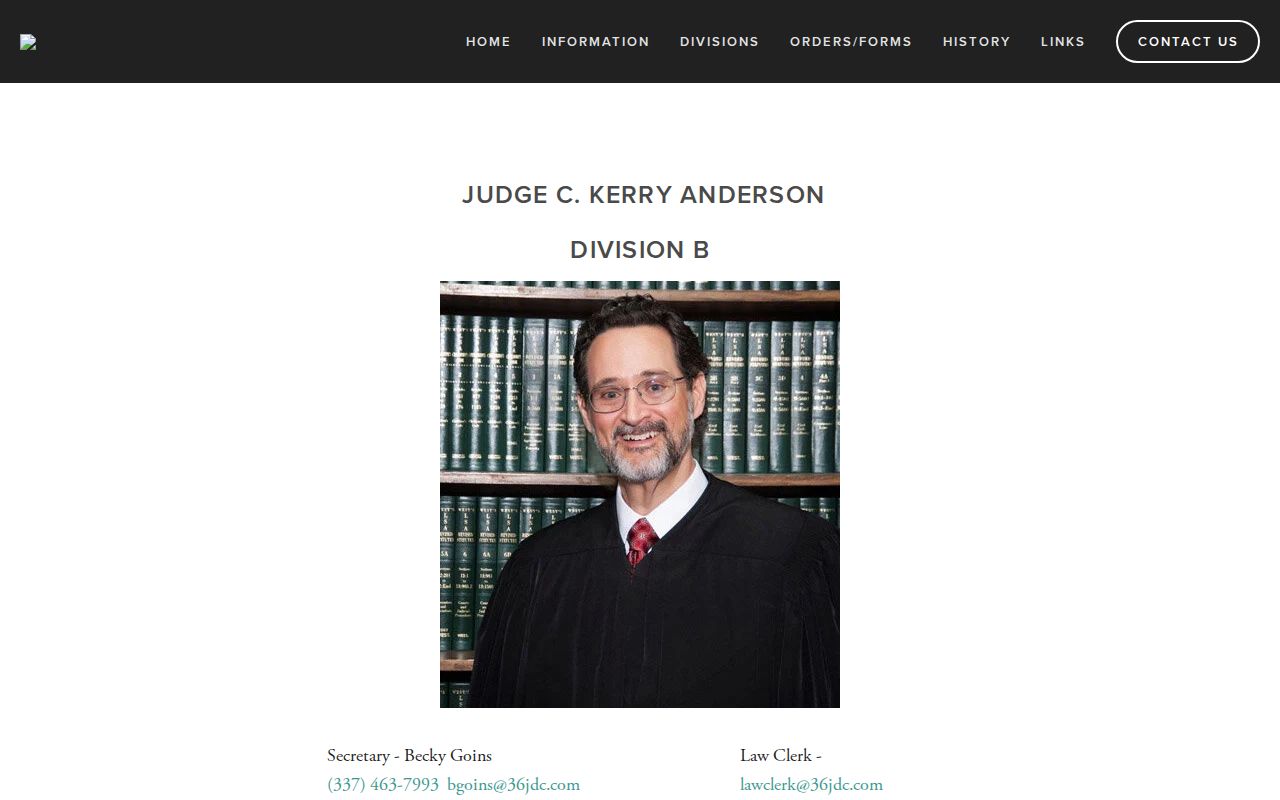
Division B uses the parish clerk record system but keeps its own chambers contact for questions about court settings. Instructions for requesting an interpreter come from the 36th JDC.
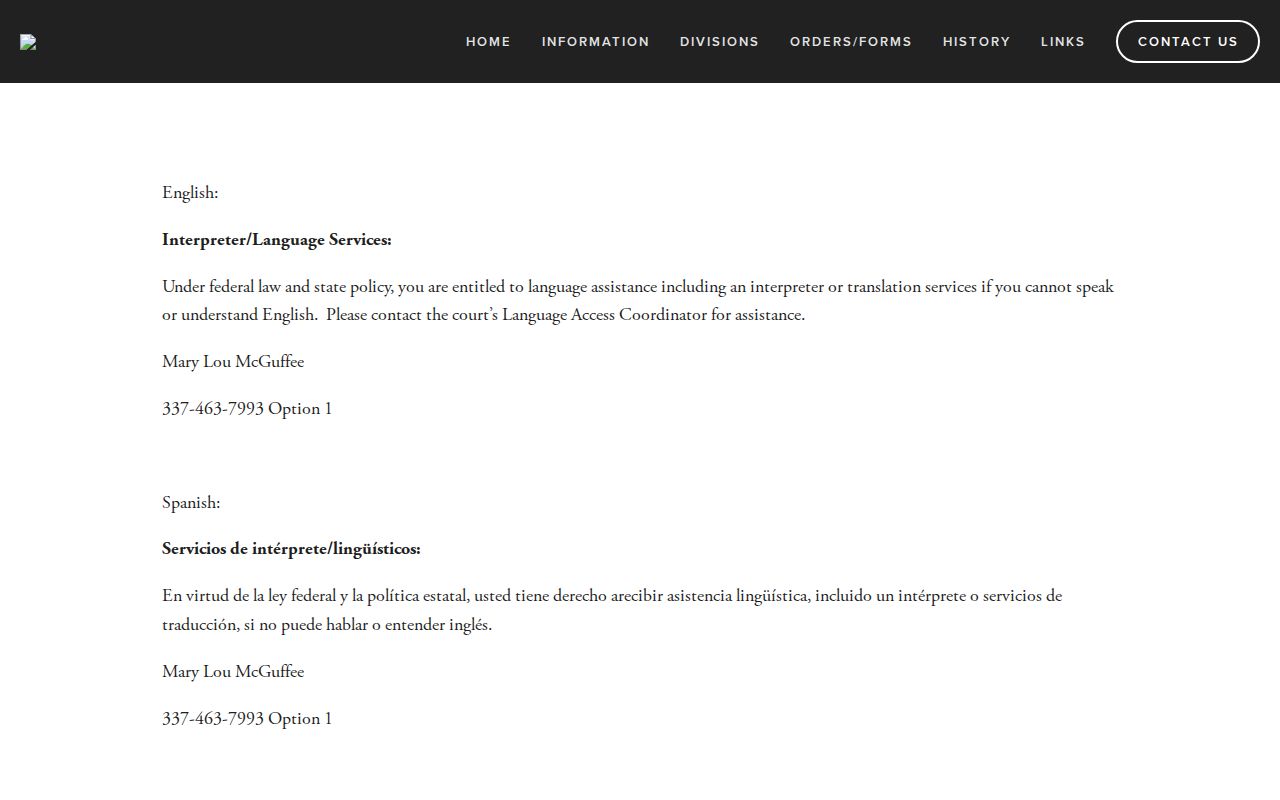
The court posts notices in English, Spanish, and Vietnamese, but the clerk keeps the records.
Beauregard Parish Court Dockets by City
Two incorporated municipalities appear in the state profile for Beauregard Parish: DeRidder and Merryville. Their docket paths do not overlap. DeRidder publishes a city code-enforcement administrative hearing calendar. State-law civil, criminal, and traffic matters belong with the court that issued them. Merryville offers no separate public municipal docket portal. In either town, the citation or summons in hand is the surest guide. It points to the JP district, the 36th JDC, or the city administrative channel that actually holds the record.
DeRidder Docket Search
2020 Census population: 9,852. City administrative adjudication is a code-enforcement calendar, while district-court records remain with the parish clerk.
Merryville Docket Search
2020 Census population: 967. No public municipal docket portal was located; identify the issuing JP or court first.
Map and Directions to the Beauregard Parish Courthouse
36th Judicial District Court civil and criminal records, held by the Beauregard Parish Clerk of Court, are kept at the courthouse in downtown DeRidder. The 1914 building was renovated and reopened in 2017 with an elevator, modern space, and a restored courtroom mural, crest, and stained-glass dome, and it houses both Division A and Division B chambers along with the clerk's civil and criminal departments.
Beauregard Parish Courthouse
200 West Second Street
DeRidder, LA 70634
(337) 463-8595
Monday through Friday, 8:30 a.m. to 4:30 p.m.; closed noon to 1:00 p.m. and holidays
Visitors and jurors are subject to search on entry, cell phones are not allowed inside the courthouse, and the court's dress notice bars tank tops, halters, shorts, hats, muscle shirts, and midriff-baring clothing. DeRidder City Hall, at 200 South Jefferson Street, handles the city's separate administrative code-enforcement hearings and is not the courthouse.